
Money
Debt snowball vs avalanche
The debt snowball and debt avalanche explained simply, with an example, the pros and cons of each and a free calculator to compare them for your own debts.
Read moreAdd your debts and the extra you can pay each month. See the order to pay them off, your debt-free date and how much interest you save, then print a tracker to color in as the balances fall.
Prefer to fill it in by hand? Download the blank debt snowball tracker (free PDF).
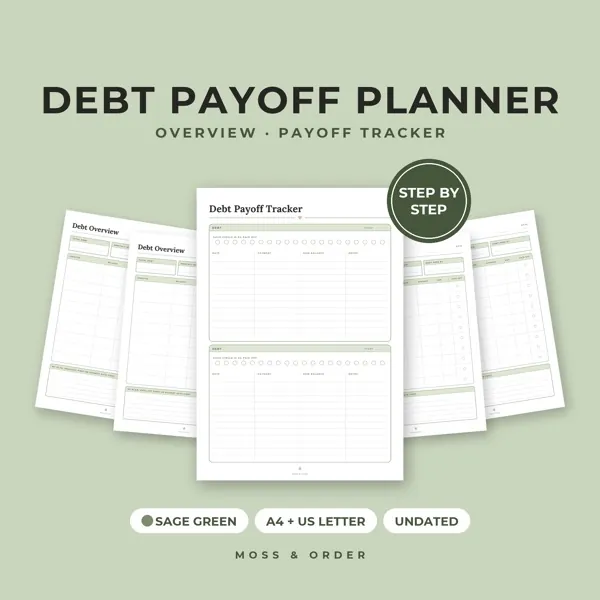
The free calculator shows your payoff date. The planner lets you track each payment by hand. Our Debt Payoff Planner printable has a snowball tracker and a payment log for each loan, so you can see every payment add up. Print it at home on A4 or US Letter.
See it on Etsy
Instant download. If a file does not open or print right, message us on Etsy and we will fix it or send a new one.
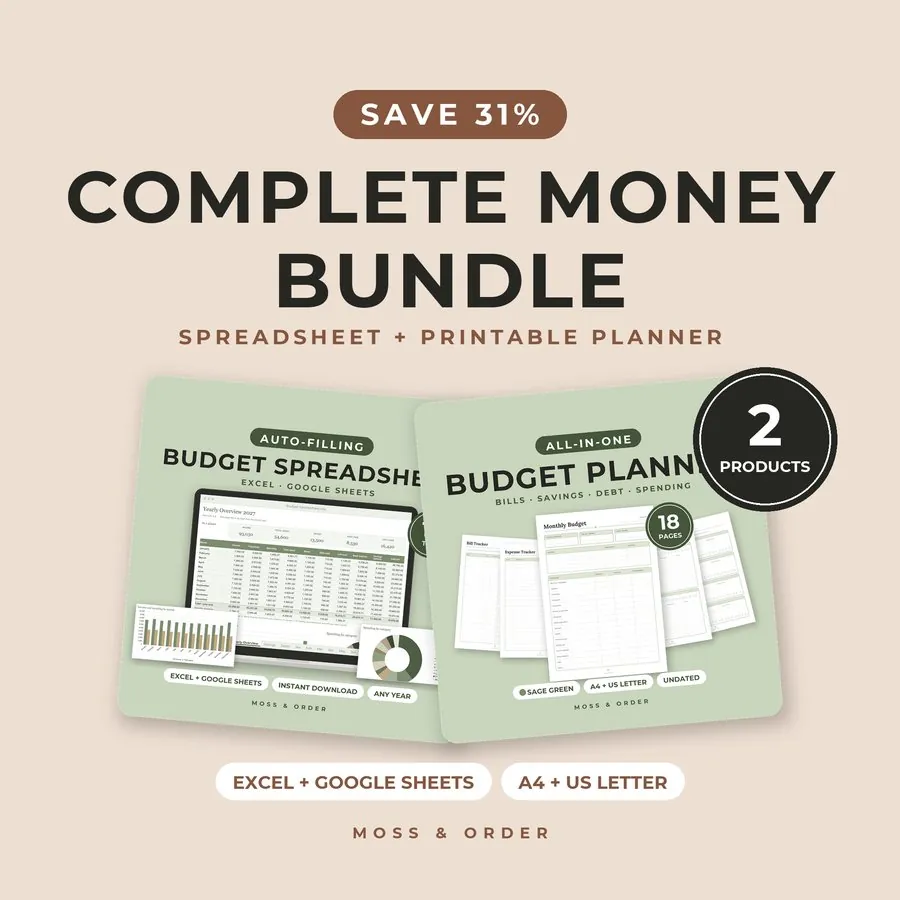
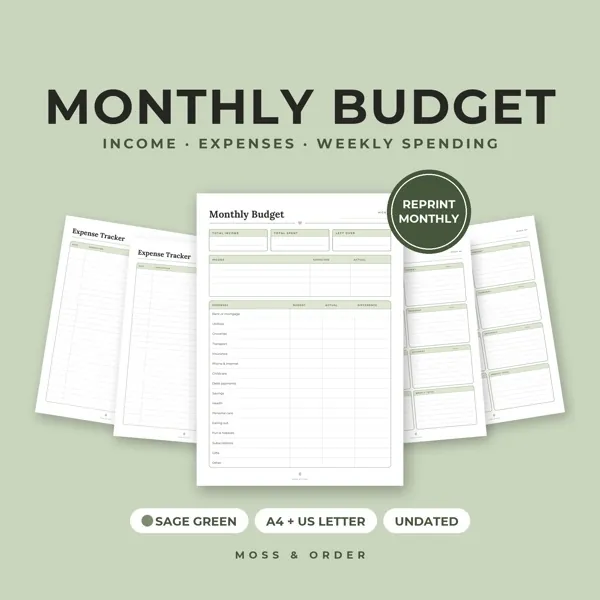
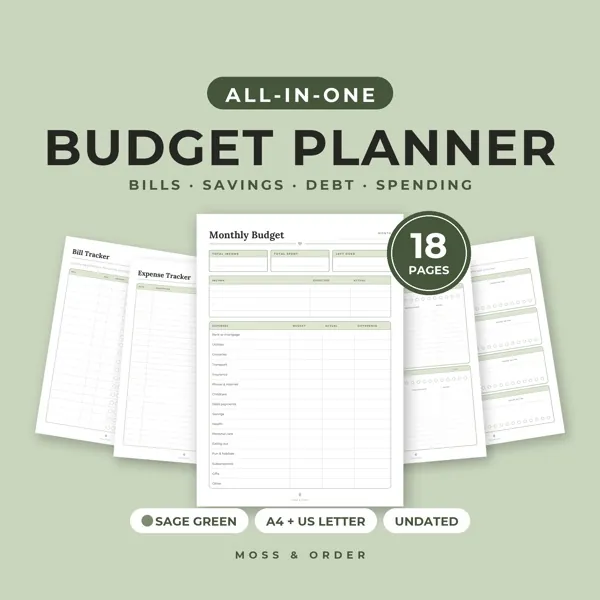
The auto filling spreadsheet does the math for the whole year, and the printable planner keeps your bills and savings goals where you see them every day.
Bundle saving: 31% less than buying each one separately.
See the Complete Money Bundle
Instant download. If a file does not open or print right, message us on Etsy and we will fix it or send a new one.
The debt snowball is a simple way to pay off several debts one at a time. You pay the minimum on every debt and put every extra amount you can find on the smallest balance. When that debt is gone, its payment rolls on to the next smallest, and the amount you pay keeps growing like a snowball rolling downhill.
Here are three debts with $290 of minimum payments and $200 extra a month, $490 in total.
| Debt | Balance | Interest | Minimum | Paid off in |
|---|---|---|---|---|
| Credit card | $1,200 | 22% | $40 | month 6 |
| Car loan | $4,500 | 7% | $150 | month 16 |
| Student loan | $9,000 | 5% | $100 | month 33 |
With the snowball, all three debts are gone in 2 years and 9 months, with about $1,180 paid in interest. Paying only the minimums would take 9 years and 6 months and cost about $3,320 in interest. The plan saves around $2,140 and almost seven years.
The avalanche method puts the extra on the debt with the highest interest rate instead of the smallest balance. On paper it costs a little less, because the expensive debt shrinks first. The snowball gives you a paid-off debt sooner, and that early win is why many people find it easier to stick with.
Often the two give almost the same result. In the example above the credit card is both the smallest and the most expensive debt, so both methods pay it first. Switch between them in the calculator to see the difference for your own debts.
You pay the minimum on every debt and put every extra amount on the smallest balance. When it is paid off, its payment rolls on to the next smallest, so the payments grow like a snowball.
The avalanche method, highest interest first, usually costs a little less. The snowball method gives quicker wins, which helps many people keep going. The best method is the one you stick with.
Most people leave the mortgage out and focus on credit cards, car loans and other consumer debt first. Add it only if you plan to pay it off early.
Your numbers are saved only in your own browser on this device. Nothing is sent to us.
This calculator assumes fixed interest rates and payments and gives general guidance only. It is not financial advice.
The debt snowball and debt avalanche explained simply, with an example, the pros and cons of each and a free calculator to compare them for your own debts.
Read moreTwelve realistic ways to save money when there is not much left at the end of the month, from a no-spend week to cheaper groceries, with free printable tools.
Read more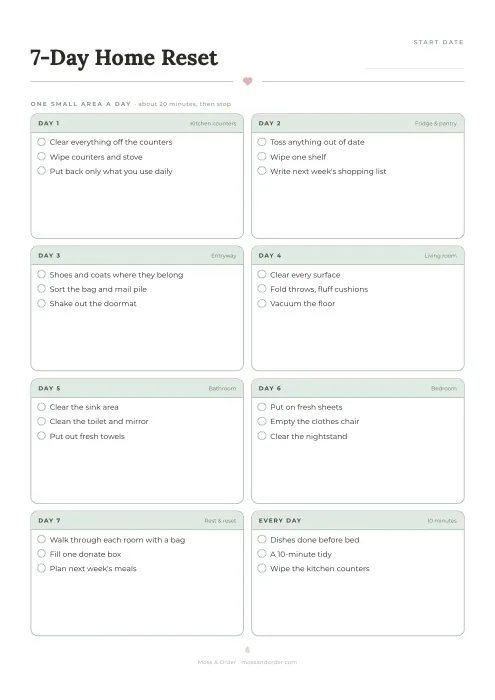
Join our newsletter and get a new free printable every week for a month, then one every month. Along the way you get a spending check, a savings kickstart, a debt snowball plan and a money date for two. We start with our 7-Day Home Reset, straight to your inbox.
One email a week for a month, then one a month. Unsubscribe anytime. See our privacy policy.