Money
How to start a budget
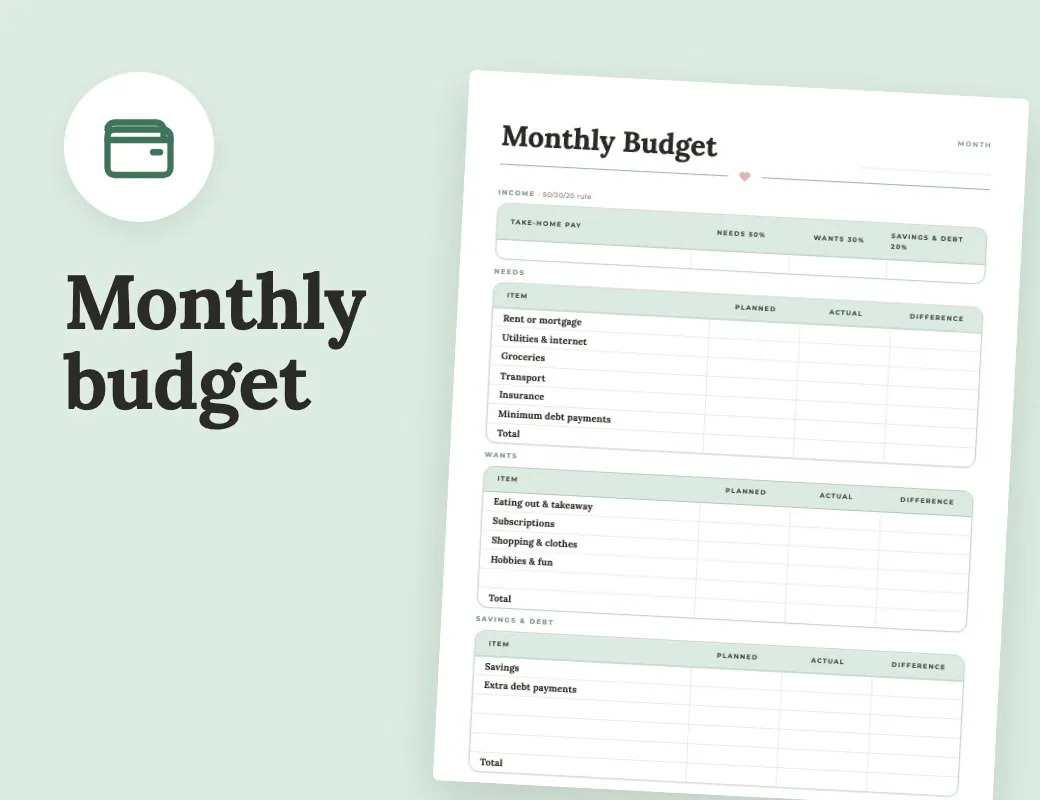
A simple, step-by-step way to start a budget when you have never kept one. Seven steps, a beginner-friendly method and a free printable budget sheet.
Read moreSaving on a small income is less about big sacrifices and more about a few habits that quietly add up. Start with two or three of these and build from there.


Saving gets much easier with a simple budget behind it. If you have never made one, start with our guide on how to start a budget or try the free 50/30/20 budget calculator. Paying off debt? Read debt snowball vs avalanche and see your own debt-free date with the debt snowball calculator.
See how much of your pay could go to savings each month, then print a one-page budget to keep you on track.
Any amount counts. Start with 1 to 5% of your pay and raise it each time you get a raise or pay off a bill.
A week where you only pay for essentials like bills, groceries and transport. It shows you how much of your spending is habit.
In a separate savings account, ideally at a different bank, so it is not one tap away from your everyday money.
A simple, step-by-step way to start a budget when you have never kept one. Seven steps, a beginner-friendly method and a free printable budget sheet.
Read moreTen simple budgeting habits for beginners: pay yourself first, plan for irregular costs, use a weekly money check and more, with free printable tools.
Read moreThe debt snowball and debt avalanche explained simply, with an example, the pros and cons of each and a free calculator to compare them for your own debts.
Read moreTen practical ways to have a lovely Christmas on a budget: set a number, plan gifts per person, save each week and keep food costs down, with a free Christmas budget planner.
Read more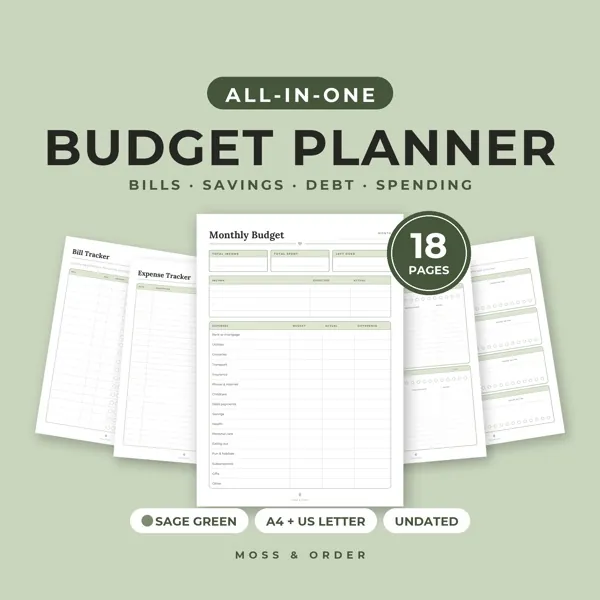
A monthly budget, bill tracker, savings tracker, debt payoff pages and an expense log, ready to print on A4 or US Letter.
See it on Etsy
Instant download. If a file does not open or print right, message us on Etsy and we will fix it or send a new one.
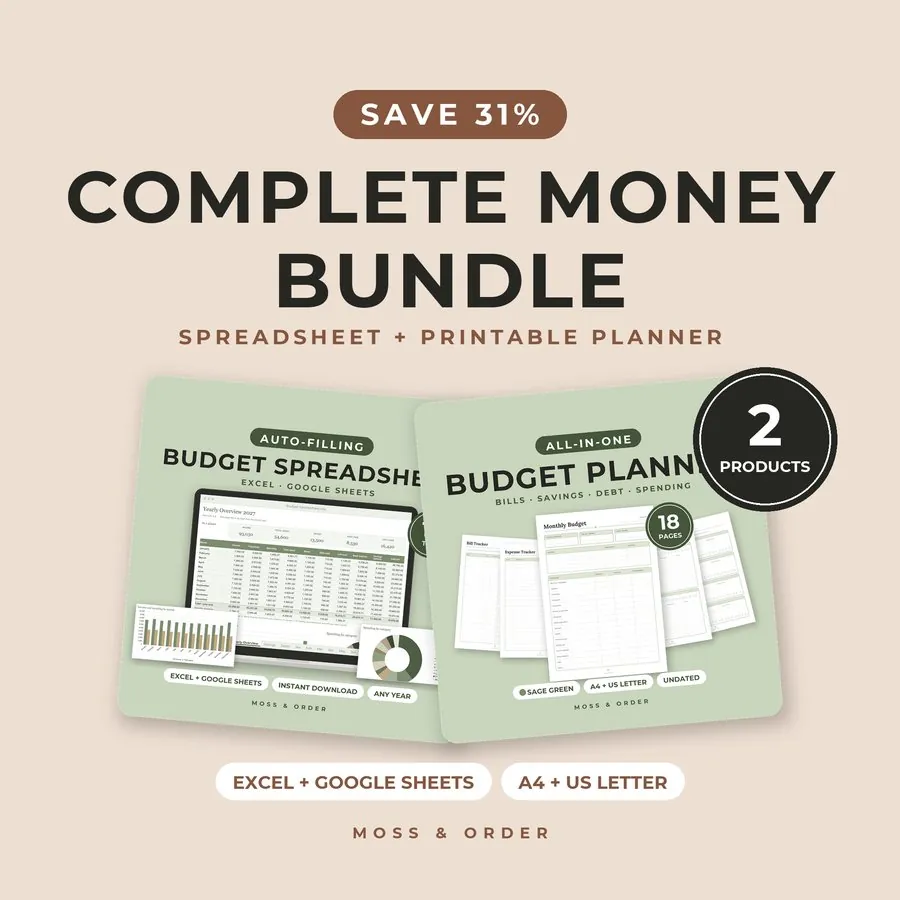
The budget spreadsheet for your screen and the printable planner for your fridge, in one download.
See it on Etsy
Instant download. If a file does not open or print right, message us on Etsy and we will fix it or send a new one.
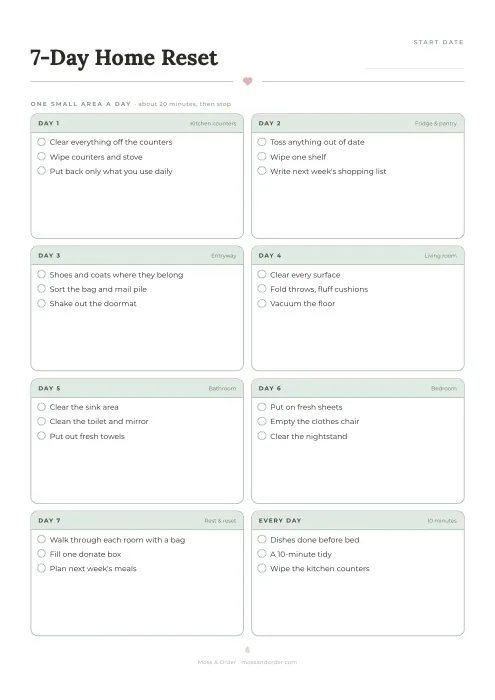
One small area a day for a week, about 20 minutes each, plus a weekly rhythm page to keep it going. We will email it to you straight away, and then a new mini challenge with its own printable every week for a month.
After the weekly challenges you will get one challenge a month. Unsubscribe anytime. See our privacy policy.