Money
How to start a budget
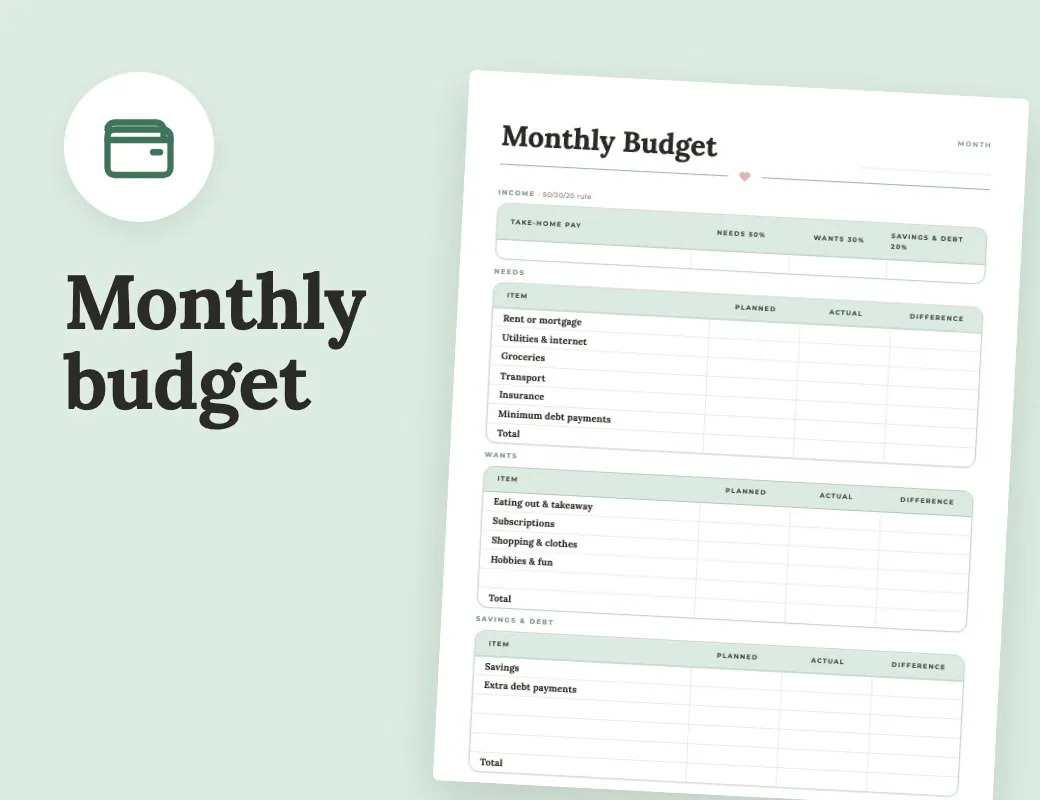
A simple, step-by-step way to start a budget when you have never kept one. Seven steps, a beginner-friendly method and a free printable budget sheet.
Read moreBoth methods get you debt-free. The difference is the order you pay things off, and which one keeps you going until the end.
List every debt with its balance, interest rate and minimum payment. Pay the minimum on all of them every month. Then put every extra you can find on one debt at a time. When that one is paid off, roll its payment onto the next. The two methods only disagree on which debt comes first.
Pay off the smallest balance first, whatever its interest rate. You clear your first debt quickly, which feels great and makes it easier to keep going.
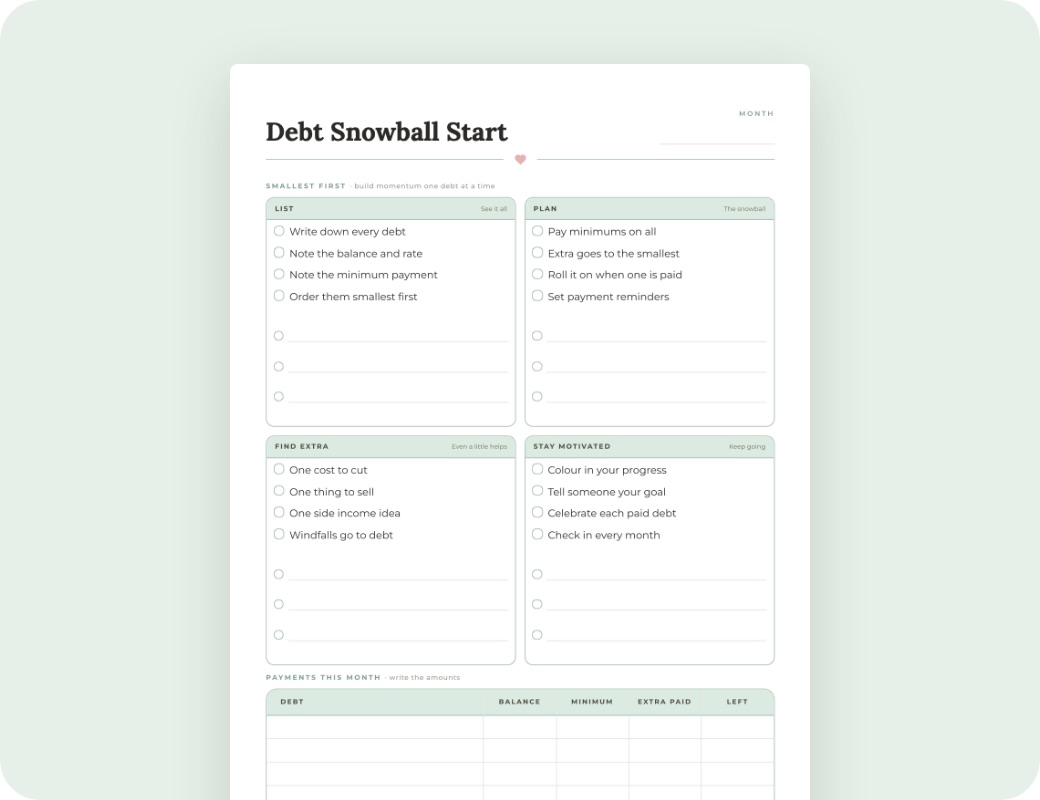
Pay off the debt with the highest interest rate first. Mathematically it costs the least, because the most expensive debt disappears soonest.
Say you have a store card of 800 at 9%, a credit card of 3,000 at 22% and a car loan of 6,000 at 7%, and you can pay 200 extra each month. The snowball clears the store card first and celebrates a win within a few months, then moves on to the credit card. The avalanche goes after the credit card first, because its 22% costs the most, and only then the store card. Try your own numbers in the free debt snowball calculator, which shows both orders.

Even 50 extra a month makes a real difference. Look for it in groceries, subscriptions and impulse buys. Our guides on how to save money on a tight budget and 10 budgeting habits have plenty of ideas.
Add your debts and see your payoff order and debt-free date with both methods side by side. Then print a tracker to color in.
The avalanche saves the most interest. The snowball gives quicker wins, which helps many people stick with it. The best one is the one you will keep doing.
Yes. Many people start with the snowball to build momentum, then switch to the avalanche once the small debts are gone.
Keep a small emergency fund of about one month of essential bills first, so a surprise cost does not add new debt.
A simple, step-by-step way to start a budget when you have never kept one. Seven steps, a beginner-friendly method and a free printable budget sheet.
Read moreTen simple budgeting habits for beginners: pay yourself first, plan for irregular costs, use a weekly money check and more, with free printable tools.
Read moreTwelve realistic ways to save money when there is not much left at the end of the month, from a no-spend week to cheaper groceries, with free printable tools.
Read moreTen practical ways to have a lovely Christmas on a budget: set a number, plan gifts per person, save each week and keep food costs down, with a free Christmas budget planner.
Read more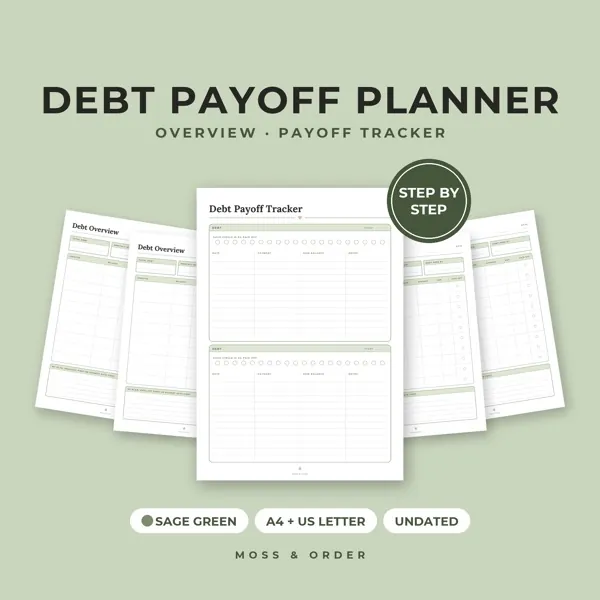
A snowball tracker and a payment log for each loan, so you can see every payment add up.
See it on Etsy
Instant download. If a file does not open or print right, message us on Etsy and we will fix it or send a new one.
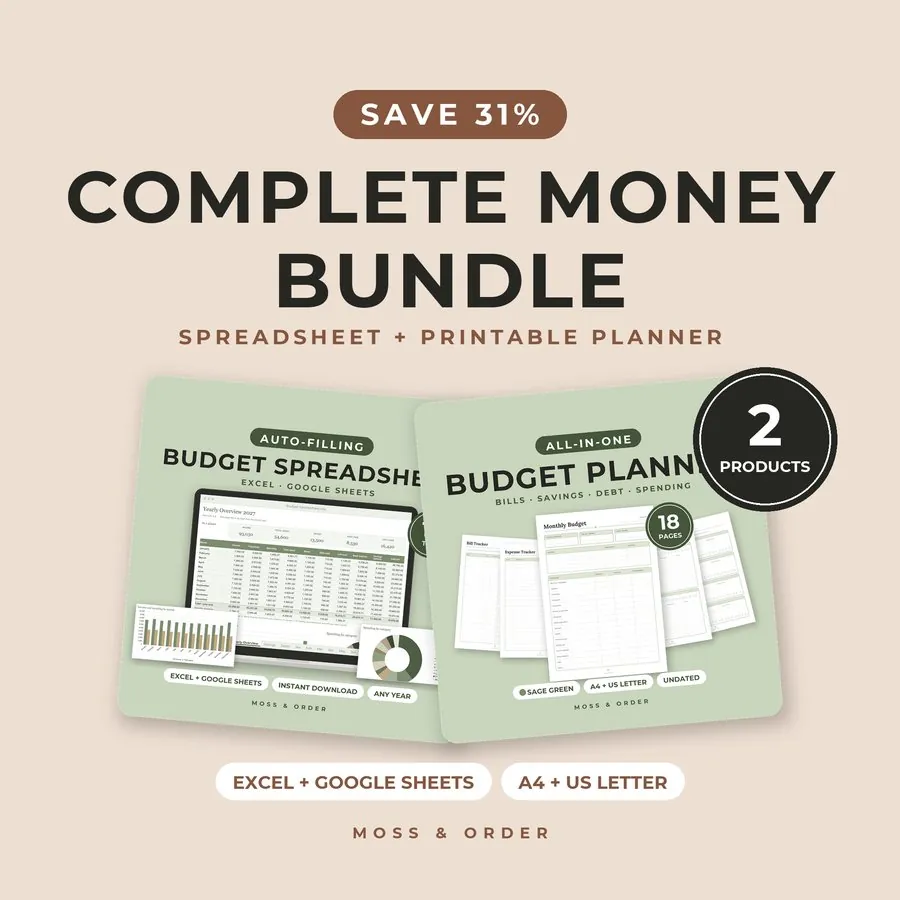
The budget spreadsheet for your screen and the printable planner for your fridge, in one download.
See it on Etsy
Instant download. If a file does not open or print right, message us on Etsy and we will fix it or send a new one.
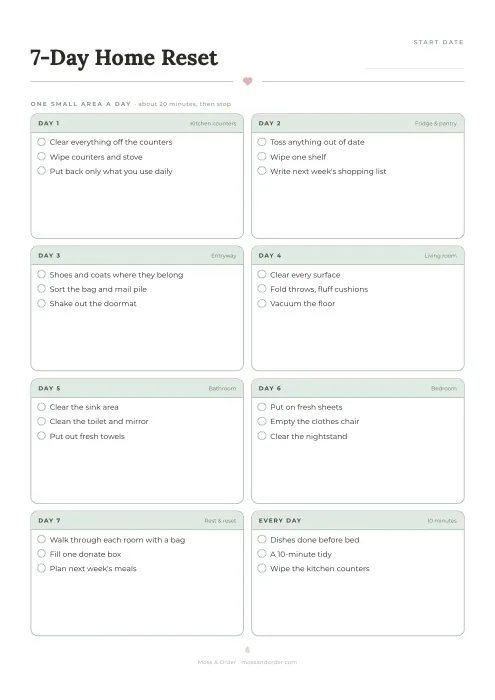
One small area a day for a week, about 20 minutes each, plus a weekly rhythm page to keep it going. We will email it to you straight away, and then a new mini challenge with its own printable every week for a month.
After the weekly challenges you will get one challenge a month. Unsubscribe anytime. See our privacy policy.