Money
How to start a budget
A simple, step-by-step way to start a budget when you have never kept one. Seven steps, a beginner-friendly method and a free printable budget sheet.
Read moreA budget only works if you keep using it. These ten small habits make that much easier, and none of them need special software.

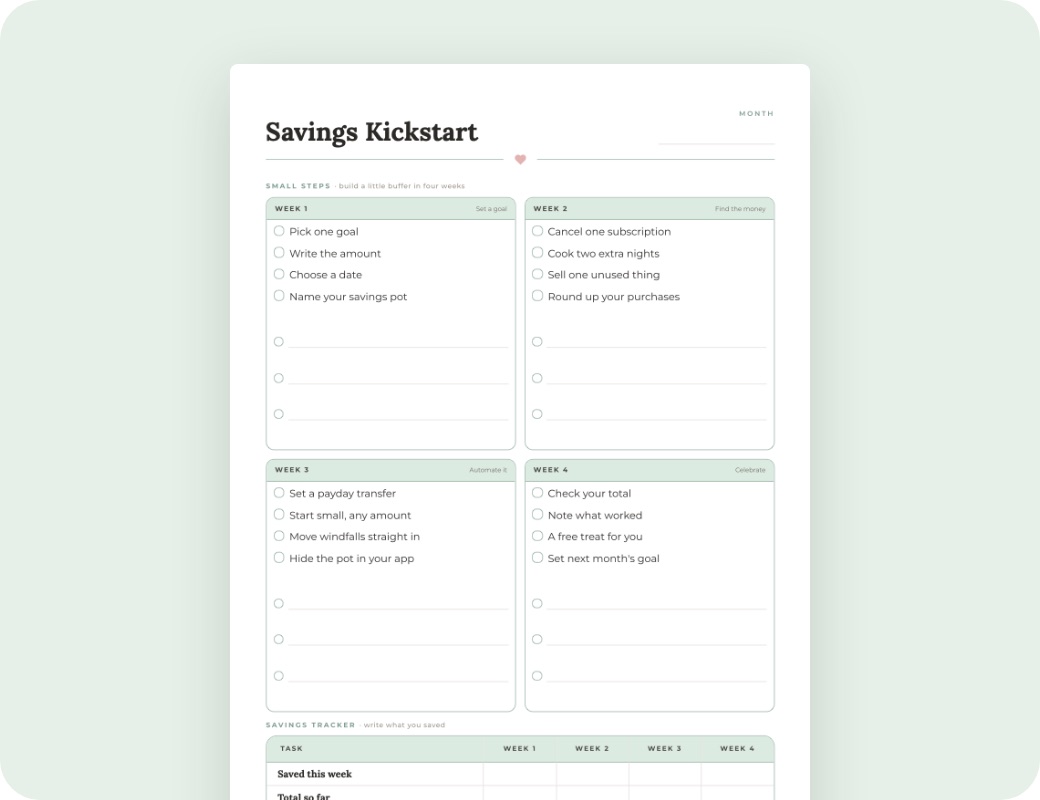
Set up an automatic transfer to savings on payday. Money you never see in your spending account is money you will not miss. Start small if you need to. The habit matters more than the amount.
Pick one day, for example Sunday evening, and spend ten minutes looking at what you spent this week and what is coming next week. It is far easier than sorting out a whole month at once.
Car repairs, birthdays, school trips and Christmas are not surprises, they just do not happen every month. Add them up for the year, divide by twelve and put that amount aside each month. These savings pots are often called sinking funds.

Before anything else, save a first buffer of around one month of essential bills. It stops a broken washing machine from going on a credit card.
A budget with no room for treats feels like a diet, and diets break. Agree on a small amount you can spend on anything, with no guilt and no need to explain.
For anything that is not planned, wait a day before you buy it. If you still want it tomorrow, fine. Most impulse buys do not survive the wait.
Groceries are the easiest category to overspend. Plan the week's meals, write a list and stick to it. Our free meal planner builds the grocery list from your meals for you.
Pay the minimum on every debt and put any extra on one debt at a time. The snowball method starts with the smallest balance for quick wins. Try it with our free debt snowball calculator.
Streaming services, apps and memberships add up quietly. Go through your bank statement every three months and cancel anything you have not used.
Want more ideas? See 12 easy ways to save money and how to do Christmas on a budget.
Out of sight really is out of mind. A printed budget on the fridge or inside a cupboard door reminds you of your plan every day, without having to open an app.
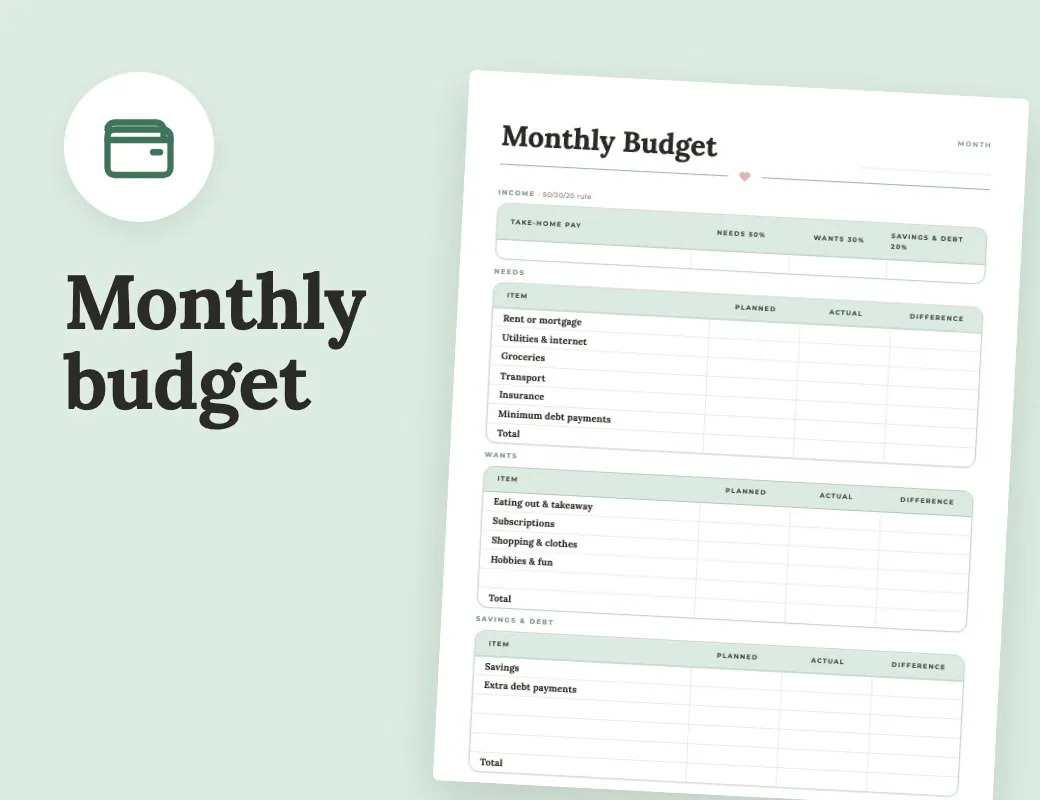
Split your take-home pay into needs, wants and savings in a minute, then print a monthly budget sheet to keep the habits going.
Paying yourself first. Move a set amount to savings on payday, before you spend anything else. Even a small amount builds the habit.
A quick check once a week is enough for most people. Ten minutes on the same day each week keeps small problems from growing.
Aim for 20% of your take-home pay if you can. If that is not possible yet, start with any amount and raise it a little every few months.
A simple, step-by-step way to start a budget when you have never kept one. Seven steps, a beginner-friendly method and a free printable budget sheet.
Read moreTwelve realistic ways to save money when there is not much left at the end of the month, from a no-spend week to cheaper groceries, with free printable tools.
Read moreThe debt snowball and debt avalanche explained simply, with an example, the pros and cons of each and a free calculator to compare them for your own debts.
Read moreTen practical ways to have a lovely Christmas on a budget: set a number, plan gifts per person, save each week and keep food costs down, with a free Christmas budget planner.
Read more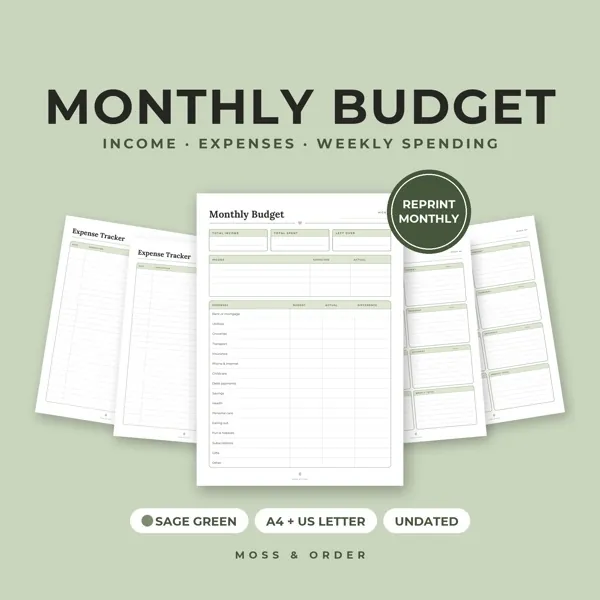
A one-page monthly budget with room for income, bills, spending and savings goals.
See it on Etsy
Instant download. If a file does not open or print right, message us on Etsy and we will fix it or send a new one.
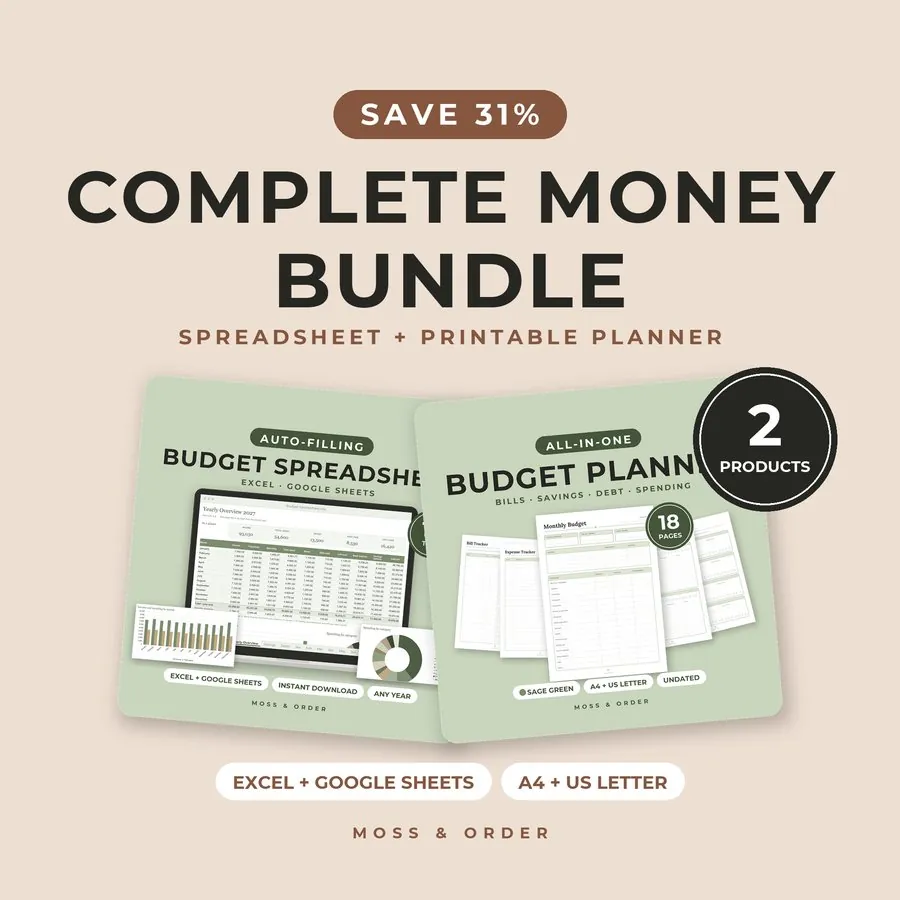
The budget spreadsheet for your screen and the printable planner for your fridge, in one download.
See it on Etsy
Instant download. If a file does not open or print right, message us on Etsy and we will fix it or send a new one.
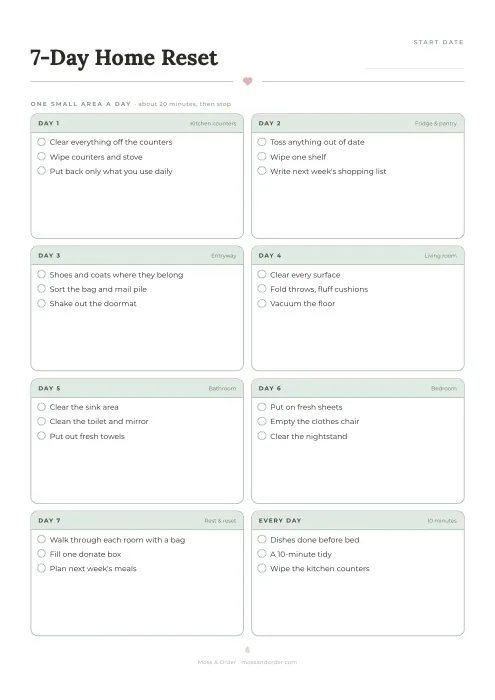
One small area a day for a week, about 20 minutes each, plus a weekly rhythm page to keep it going. We will email it to you straight away, and then a new mini challenge with its own printable every week for a month.
After the weekly challenges you will get one challenge a month. Unsubscribe anytime. See our privacy policy.