
Money
10 budgeting habits every beginner should know
Ten simple budgeting habits for beginners: pay yourself first, plan for irregular costs, use a weekly money check and more, with free printable tools.
Read moreYou do not need an app, a finance degree or a perfect month to start. Here is a simple plan that takes about an hour, and a free calculator that does the math for you.
Start with the money that actually lands in your account each month, after tax. If your income changes from month to month, use your lowest month from the past year. Planning with a low number means the good months feel like a bonus instead of the bad months feeling like a crisis.
Write down everything that costs the same every month: rent or mortgage, utilities, insurance, phone, internet, transport passes, childcare, subscriptions and minimum debt payments. Go through last month's bank statement line by line, because small direct debits are easy to forget.
Next, add up the costs that change: groceries, eating out, fuel, clothes, gifts and household bits. Do not guess. Take the real numbers from your last one or two bank statements. Most people are surprised by one category, and it is usually food.
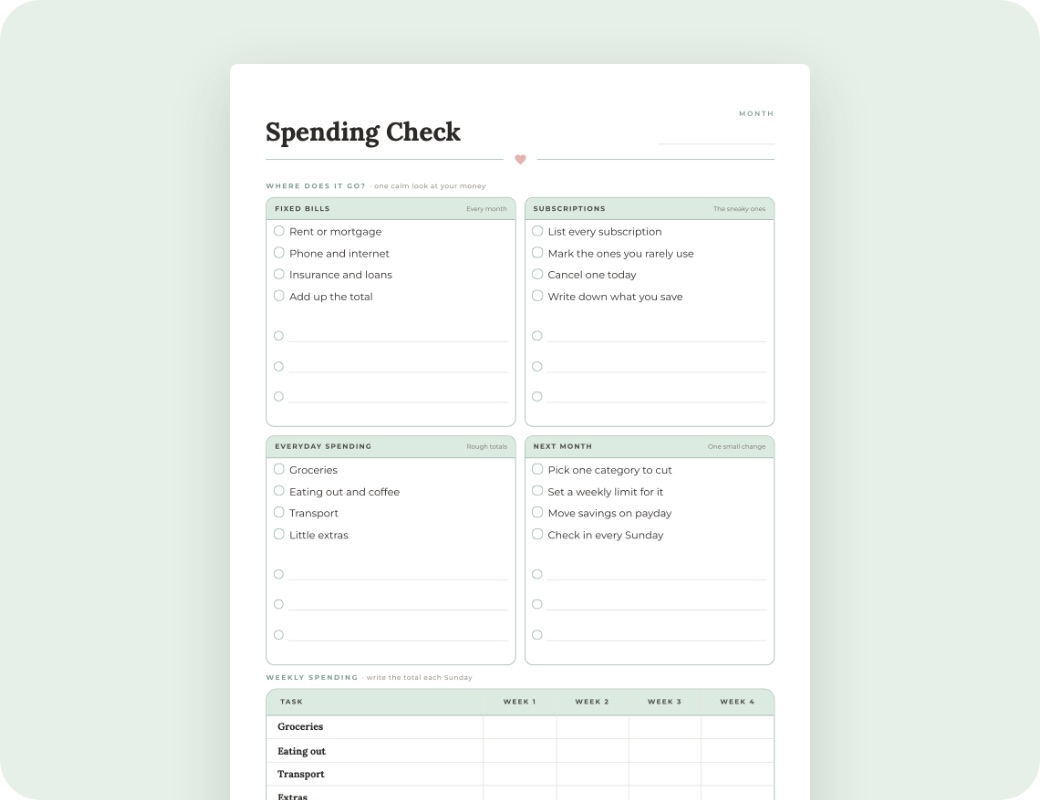
For a first budget, the 50/30/20 rule is the easiest place to start:
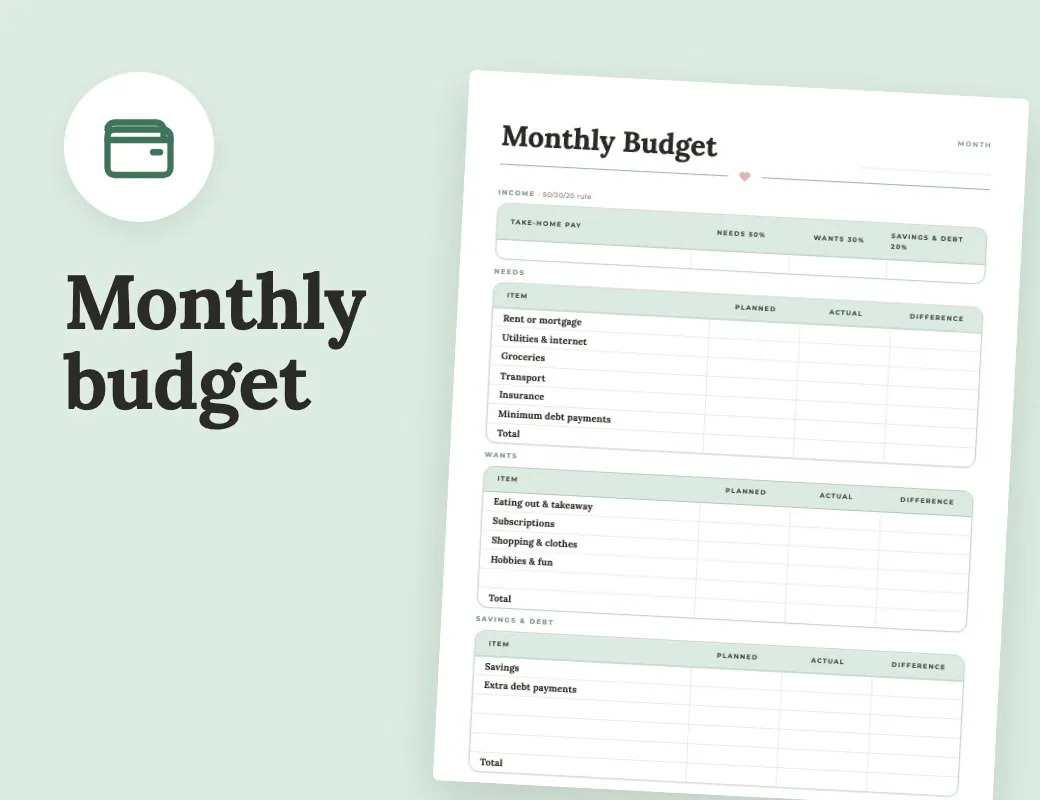
If your needs are more than half of your income, which is common where rent is high, start with 60/20/20 or 70/20/10 and move towards 50/30/20 over time. Our free budget calculator works out the amounts for you.
Now write a monthly limit next to each category. Start with the fixed bills, then savings, and share what is left between the flexible costs. Pay yourself first by moving your savings on payday, before the month has a chance to spend them.
Write down what you spend, or check your banking app every few days. You are not trying to be perfect. You are trying to notice. A printed budget on the fridge helps, because you see it every day without opening an app.
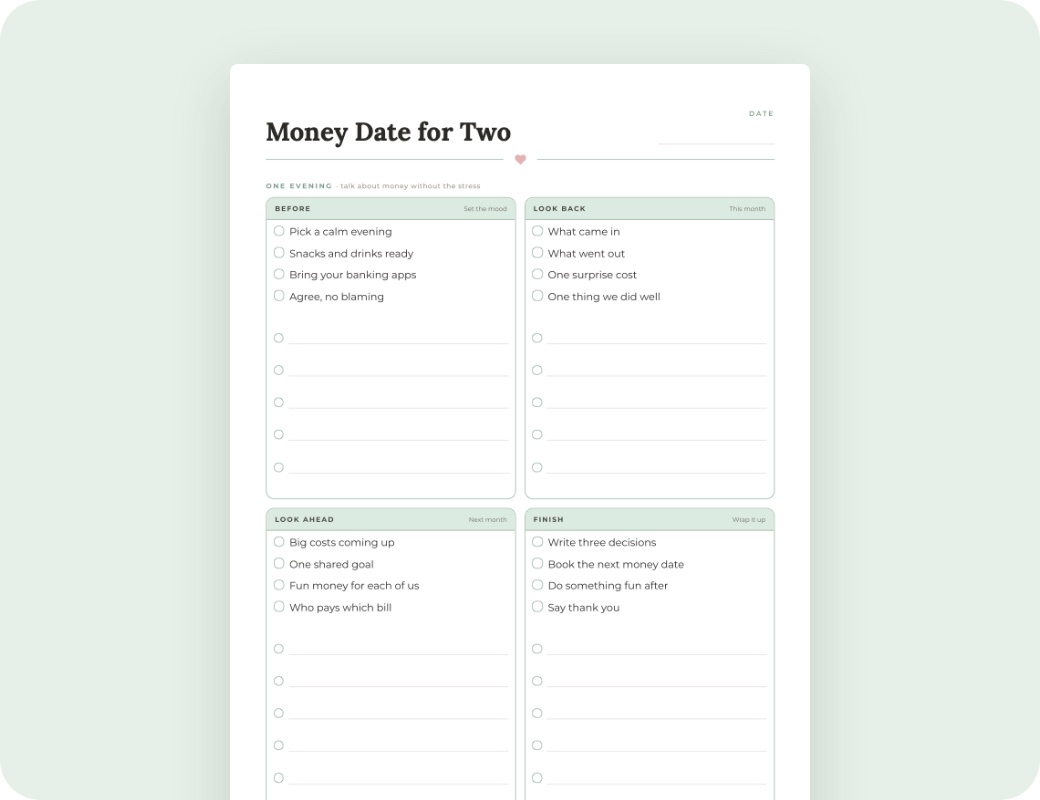
At the end of the month, compare the plan with what happened. Move money from categories you did not use to the ones that ran over, and try again. Your third budget will be much more accurate than your first.
Once your budget is running, read how to save money on a tight budget, and if you have debts, debt snowball vs avalanche helps you choose the fastest way out.
Type in your take-home pay and see how much to spend on needs, wants and savings. Then print a one-page budget for the fridge.
The 50/30/20 budget. Half of your take-home pay goes to needs, 30% to wants and 20% to savings and extra debt payments. It only asks you to watch three numbers.
Most people need about three months. The first month shows where the money goes, the second month the plan gets more realistic, and by the third it starts to feel normal.
If you share bills, yes. Sit down together once a month, agree on the shared costs and give each of you a small amount to spend freely without asking.
Ten simple budgeting habits for beginners: pay yourself first, plan for irregular costs, use a weekly money check and more, with free printable tools.
Read moreTwelve realistic ways to save money when there is not much left at the end of the month, from a no-spend week to cheaper groceries, with free printable tools.
Read moreThe debt snowball and debt avalanche explained simply, with an example, the pros and cons of each and a free calculator to compare them for your own debts.
Read moreTen practical ways to have a lovely Christmas on a budget: set a number, plan gifts per person, save each week and keep food costs down, with a free Christmas budget planner.
Read more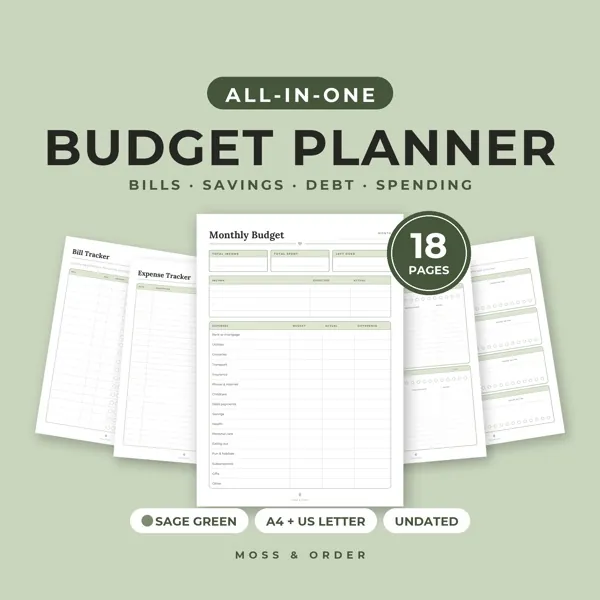
A monthly budget, bill tracker, savings tracker, debt payoff pages and an expense log, ready to print on A4 or US Letter.
See it on Etsy
Instant download. If a file does not open or print right, message us on Etsy and we will fix it or send a new one.
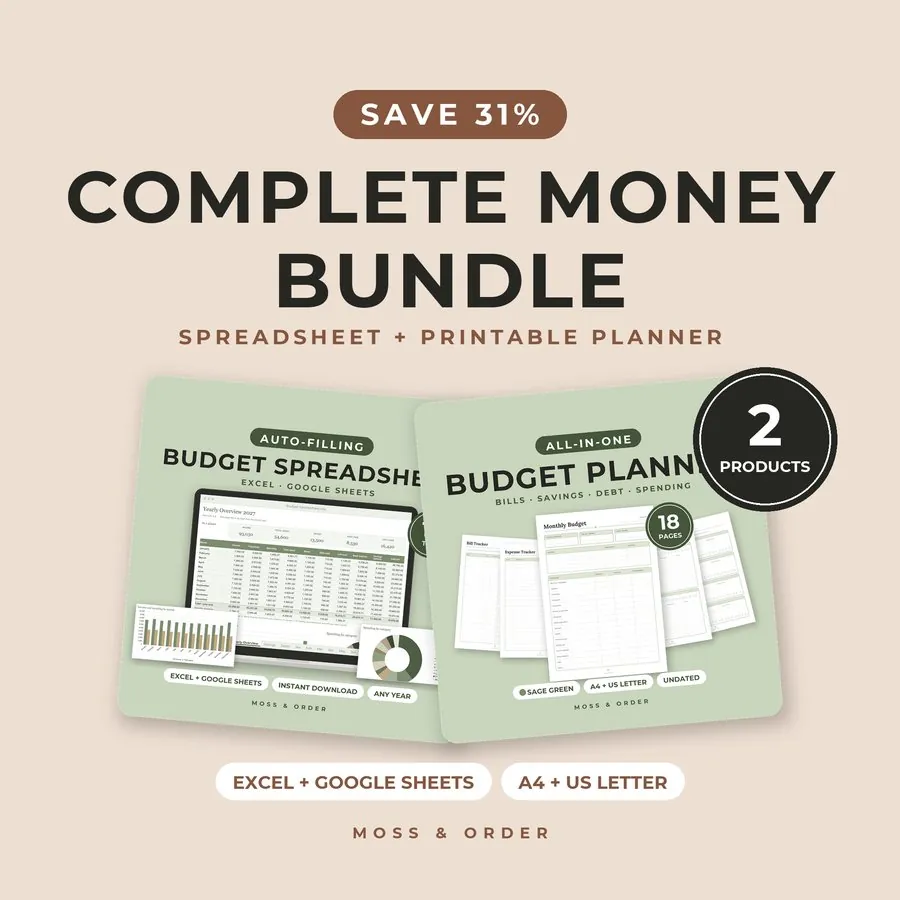
The budget spreadsheet for your screen and the printable planner for your fridge, in one download.
See it on Etsy
Instant download. If a file does not open or print right, message us on Etsy and we will fix it or send a new one.
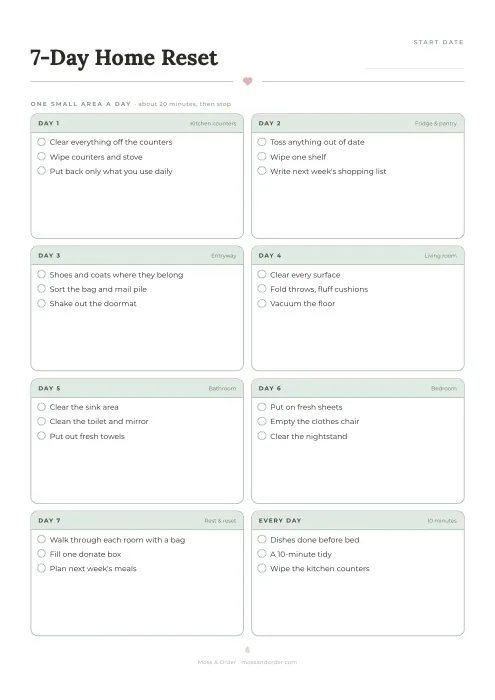
One small area a day for a week, about 20 minutes each, plus a weekly rhythm page to keep it going. We will email it to you straight away, and then a new mini challenge with its own printable every week for a month.
After the weekly challenges you will get one challenge a month. Unsubscribe anytime. See our privacy policy.